


Getting AI-Ready in Healthcare, Pharma and Biotech: Why Data Foundations Matter More Than Algorithms
AI is advancing fast, but most organizations in healthcare, pharma, and biotech are still asking the same question: how do we actually make it work in practice?
In our recent talk show,
Lotte Smets (Director of Data Management, Julius Clinical),
Yuri van de Veerdonk (Head of Business Intelligence, Alphega Europe),
and Michael Grebennikov (Co-Founder & Co-CEO, Digiteum)
shared what it really takes to move from scattered, inconsistent data to scalable AI impact across clinical trials, pharmacy operations, and enterprise healthcare systems.
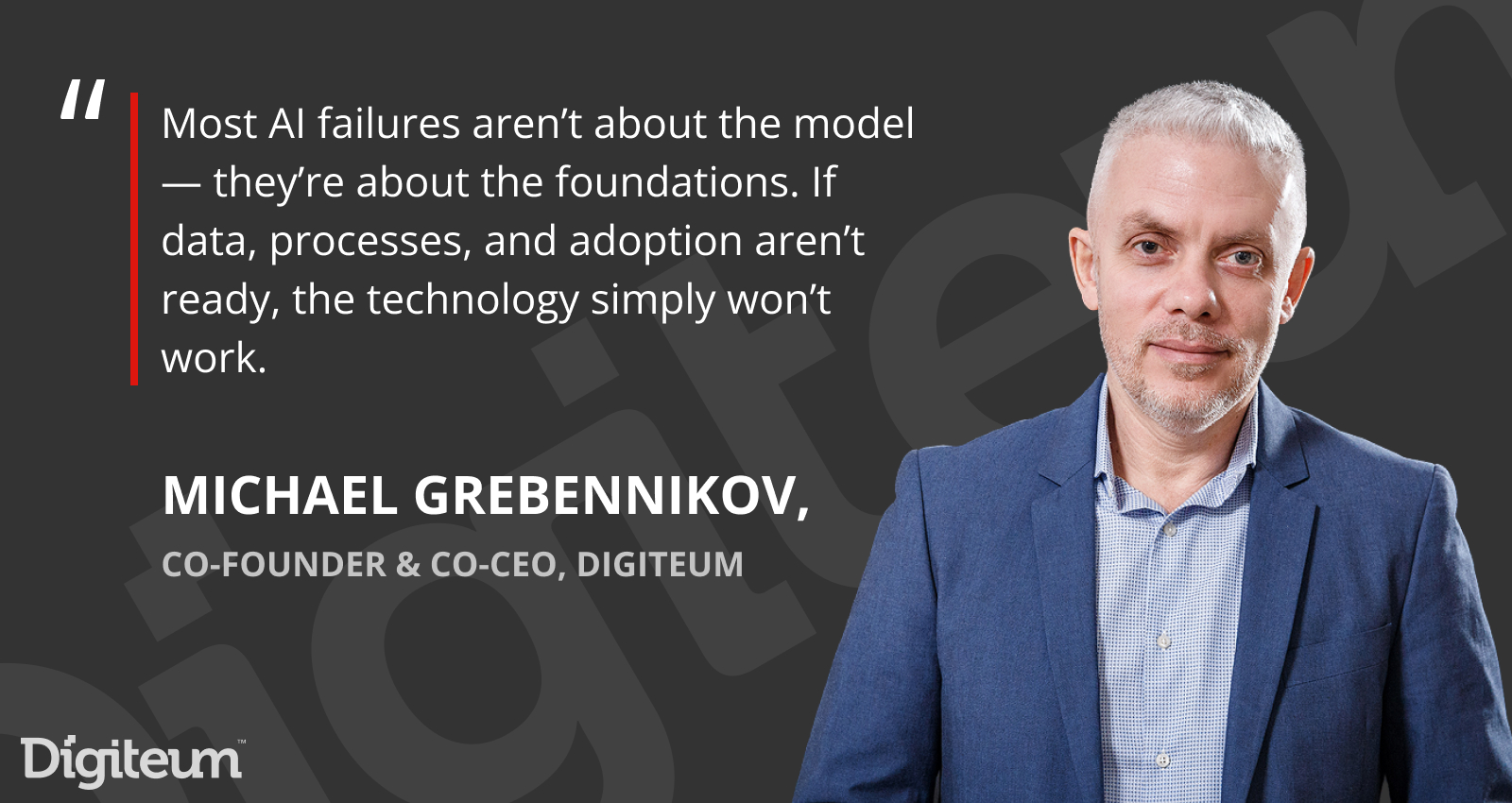
The message was consistent: the biggest barriers to AI aren’t the models. They’re the data, processes, people, and regulation around them.
The gap between experimentation and real adoption is not primarily technical, it’s structural. Data lives in spreadsheets, local systems, and country-specific formats. Governance is inconsistent. Teams often lack the cloud and data-engineering skills to deploy AI safely. That’s why AI readiness must be a strategic priority.
Lotte explained how modern trials now collect lab samples, CRFs, wearables and patient-reported outcomes from far more sources than traditional designs. AI helps unify those streams into a central monitoring view, enabling earlier detection of anomalies and faster corrective action.
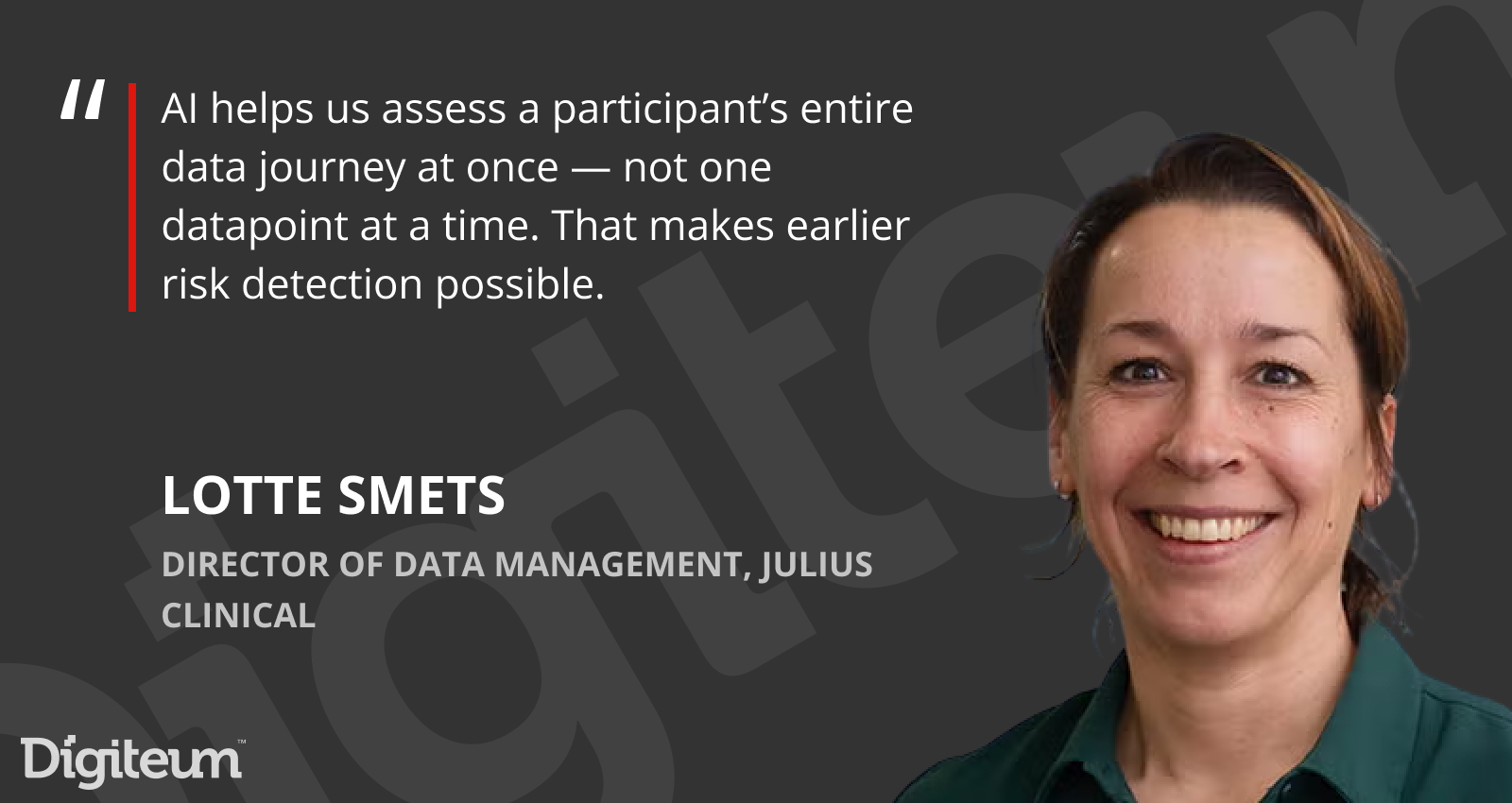
Shifting from manual, point-by-point checks to a holistic, near-real-time oversight model improves data quality and shortens the time to act when issues arise. Regulators like the EMA encourage AI use but require a risk-based approach, human oversight, and documented governance, so compliance and transparency must be built into every solution.
Yuri described their European BI initiative: standardizing product coding and reporting across countries so pharmacies and manufacturers can benchmark and improve operations.
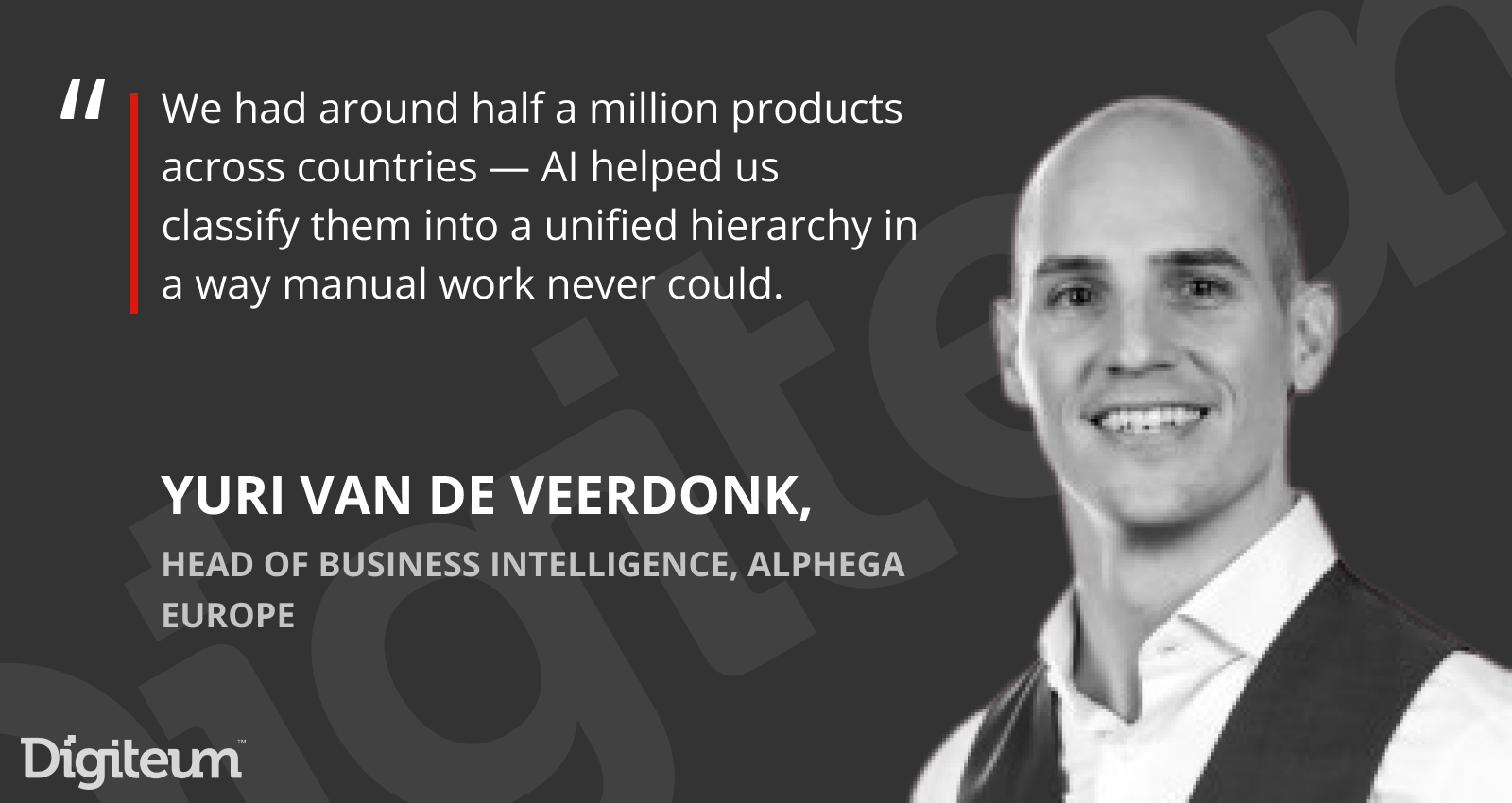
That standardized layer unlocks practical use cases: cross-country reporting, supplier insights, campaign measurement, and faster substitution decisions during stockouts. The payoff is twofold: better commercial insights and stronger capabilities to roll out patient-centered services like adherence programs.
Digiteum’s experience across multiple projects surfaced three recurring obstacles:
- Cultural — healthcare organizations hold highly sensitive data and operate under strict regulation; teams need trust frameworks before they rely on AI.
- Structural — data is scattered across departments, systems, and countries; centralizing and standardizing it is essential.
- Skills — many teams lack the engineering, cloud, and governance expertise to deploy and maintain safe AI.
Speakers agreed regulators are open to AI innovation, but they expect strong documentation, risk mitigation, and human-in-the-loop designs. The biggest friction comes from low data literacy and the lack of shared frameworks that operational teams trust. Building governance, traceability, and clear SOPs reduces friction and speeds adoption.
The panel recommended a pragmatic roadmap for healthcare, pharma, and biotech organizations:
- Run a Data & AI Readiness Assessment to map current assets and gaps.
- Standardize data formats and build a compliant, centralized data layer.
- Pick high-value, operational use cases and design pilots with scaling in mind.
- Ensure human oversight and governance are integral to any AI flow.
- Invest in data literacy and train operational teams early.
- Measure impact with clear KPIs and iterate.
These steps move AI from one-off experiments to measurable operational improvements.
How we can help
At Digiteum we offer a short Data & AI Readiness Review, a quick assessment that maps your data landscape, identifies gaps, and gives you a clear, actionable roadmap. If you already know the problem you want to solve, we can jump straight into a 10-to-12-week proof of concept to show real results fast.
Book your consultationFrom clinical trials to pharmacy chains to hospital operations, the industry is heading toward connected, data-driven ecosystems. The organizations that succeed will be those that build strong data foundations now and bring their people along the journey.
Technology is moving fast, but adoption, governance, and data readiness determine real-world impact.
You can watch the complete discussion, including practical examples, audience questions, and regulatory insights, in the full recording below: