


From AI Pilots to Real Impact in Logistics: Lessons from Our Talkshow
AI has been part of logistics for years, but many organisations still struggle to move beyond pilots. Proofs of concept work in isolation, yet fail to scale into reliable, day-to-day operations. In our recent Digiteum talkshow, we explored what it really takes to turn AI experimentation into measurable operational impact, and how logistics companies can prepare for the next wave of agentic AI.
Together with
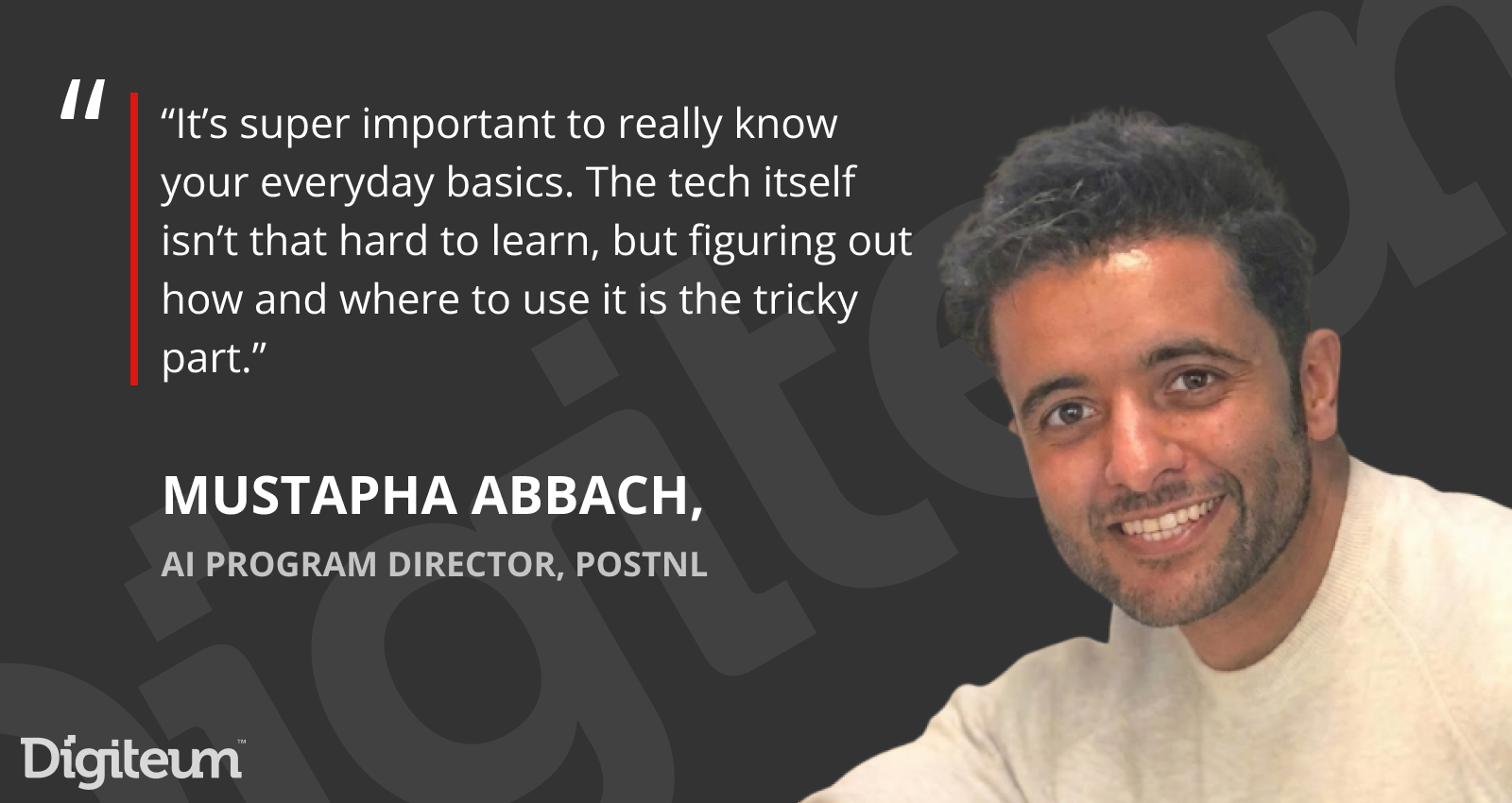
Mustapha Abbach (AI Program Director at PostNL),
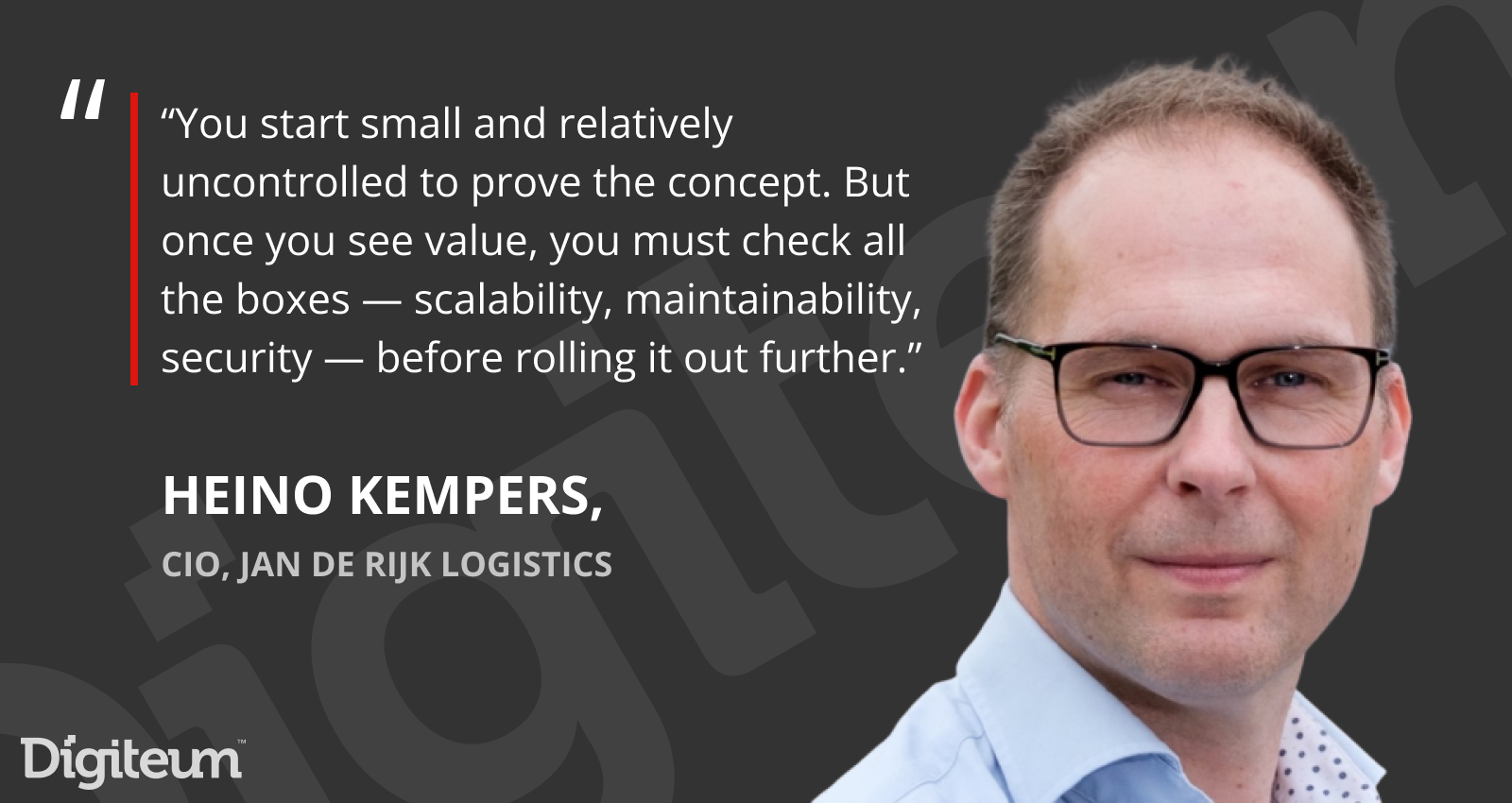
Heino Kempers (CIO at Jan de Rijk Logistics),
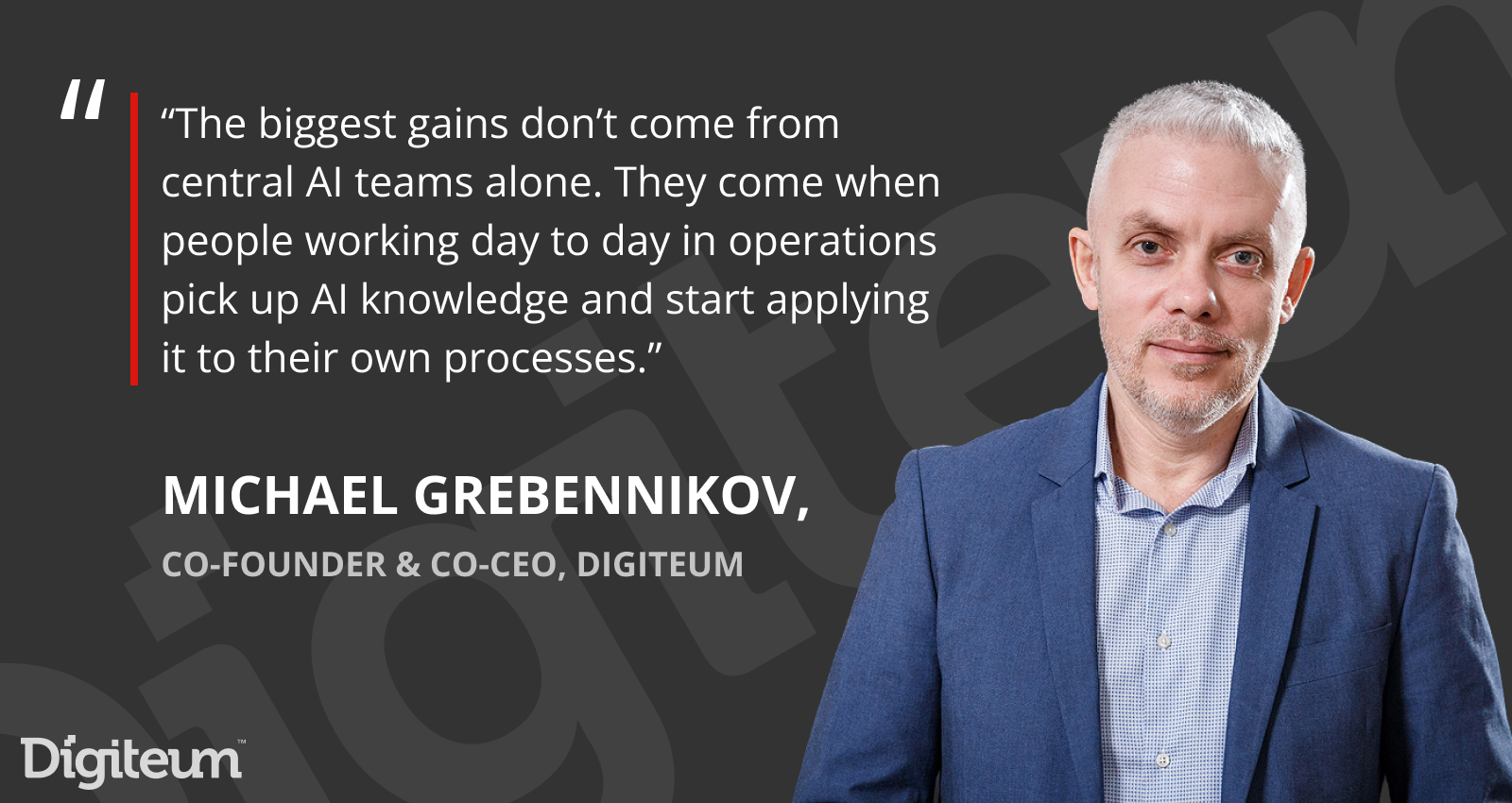
and Michael Grebennikov (Co-Founder & Co-CEO, Digiteum)
we discussed what works in practice, where organisations get stuck, and how to build AI-ready operations in complex supply chain environments.
Most logistics organisations are still in the early or intermediate stages of AI adoption. Many are experimenting, some have integrated AI into selected processes, but only a few are scaling it across the organisation.
PostNL represents one of the more advanced examples. AI is already embedded in forecasting, routing, customer service and content-related workflows. At the same time, the speakers stressed that even mature organisations continue to face challenges around data ownership, governance and organisational readiness.
The talkshow highlighted several areas where AI is delivering tangible value today:
- Forecasting and planning, powered by traditional machine learning
- Customer service automation, including chatbots and speech-to-text solutions
- Document processing and administration, which many participants identified as a major opportunity
- Repetitive task automation across operational and support functions
Generative AI is most commonly used for language-heavy tasks, while traditional machine learning remains deeply embedded in planning and optimisation. Rather than replacing existing approaches, organisations are increasingly combining both.
A recurring theme in our talkshow was that successful AI initiatives start small, but don’t stay small forever. The key is knowing when and how to scale.
The speakers agreed on a pragmatic approach:
- Start with a focused, business-driven use case
- Run a short proof of concept to validate value
- Design the AI solution into real workflows
- Strengthen data quality, governance and security
- Scale gradually, especially for customer-facing applications
Rushing directly from pilot to full rollout without these steps often leads to user resistance, operational risk, or reputational damage.
While AI technology is evolving fast, the main bottlenecks are rarely technical. Instead, they sit at the intersection of data, organisation and people.
Poor data quality, unclear ownership, slow decision-making and limited AI literacy can all block progress. Several speakers emphasized the importance of involving end users early, especially process experts who understand the work on the ground.
To support this, many organisations are moving toward layered IT environments: separating a stable, risk-averse core from a more flexible innovation layer where experimentation is encouraged.
The conversation also looked ahead. Agentic AI, systems that act more autonomously across tasks, is seen as a natural evolution beyond brittle RPA and isolated AI tools. In logistics, this could reshape everything from customer interactions to planning and execution.
However, the speakers were clear: agentic AI requires even stronger governance, clearer process boundaries and careful rollout. Without that foundation, autonomy quickly becomes risk.
- AI success in logistics starts with process understanding, not tools
- Small pilots are essential, but scaling requires discipline
- Data quality and governance are prerequisites, not afterthoughts
- End-user involvement and AI literacy drive adoption
- Agentic AI offers major potential, if introduced responsibly
These steps move AI from one-off experiments to measurable operational improvements.
With Digiteum, get value before the project even begins
Start with a Data Readiness & AI Review, where we assess your current setup, identify gaps in data and governance, and outline a practical roadmap toward a focused 10–12 week PoC.
Book your consultationAI in logistics is no longer about experimentation for its own sake. With rising costs, tight labour markets and increasing customer expectations, organisations need AI that works reliably in daily operations. Our talkshow showed that the path forward is less about chasing the latest model, and more about building strong foundations in data, governance and people.
If you’re looking to move from AI pilots to scalable impact, starting with a clear understanding of your data and processes is the fastest way forward.
You can watch the complete talkshow in the full recording below: