


Digital transformation in healthcare is moving beyond experiments. Artificial intelligence has the power to minimize diagnostic errors, accelerate clinical workflows, and deliver more accurate, personalized care, but only when healthcare organizations combine technology with the right culture, collaboration, and strategy.
In our recent talk show, three experts
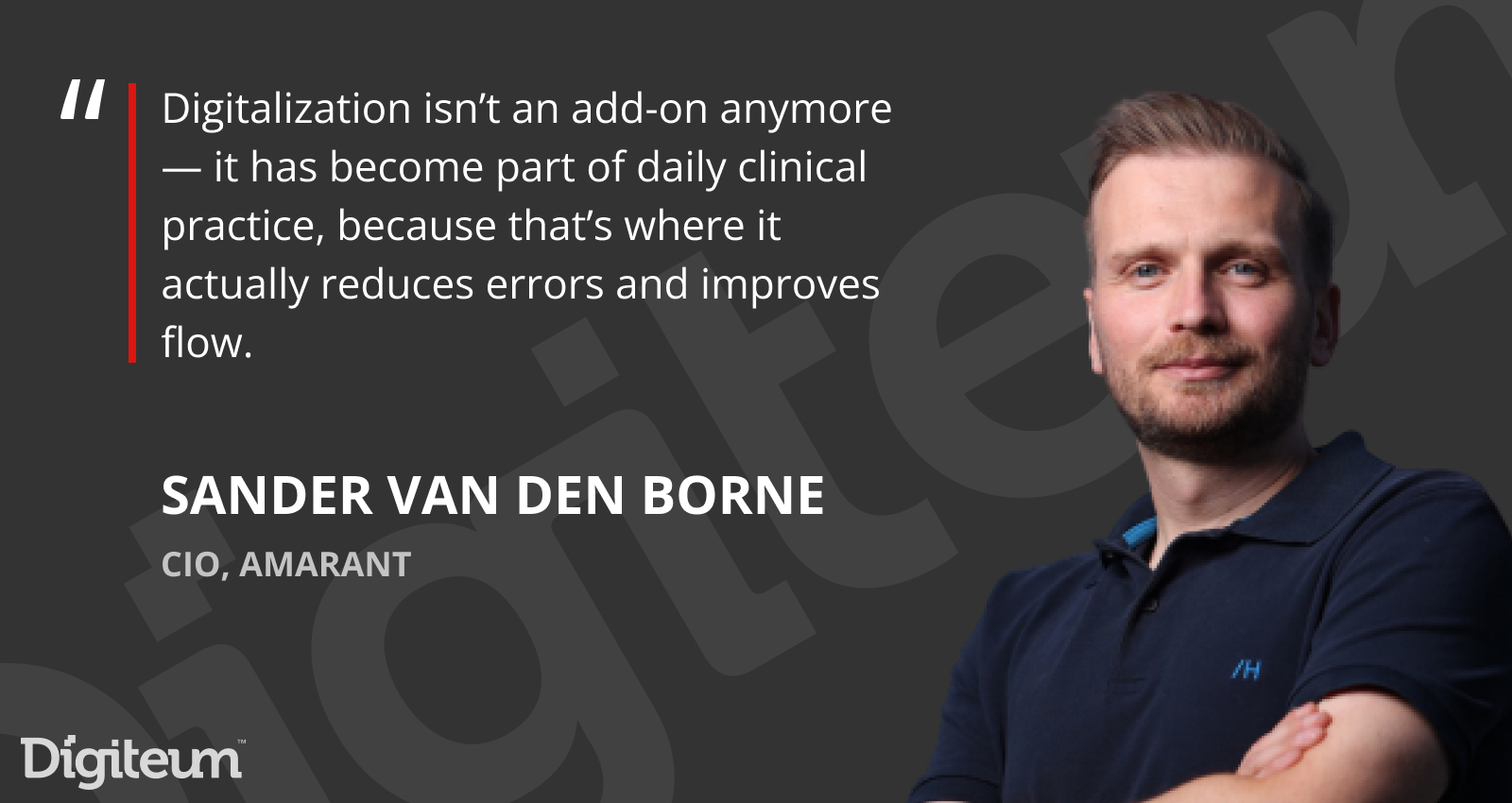
Sander van den Borne (CIO, Amarant; former Clinical Process Manager at GGzE),
Nathalie Popken (Innovation Manager, Rotterdam Eye Hospital)
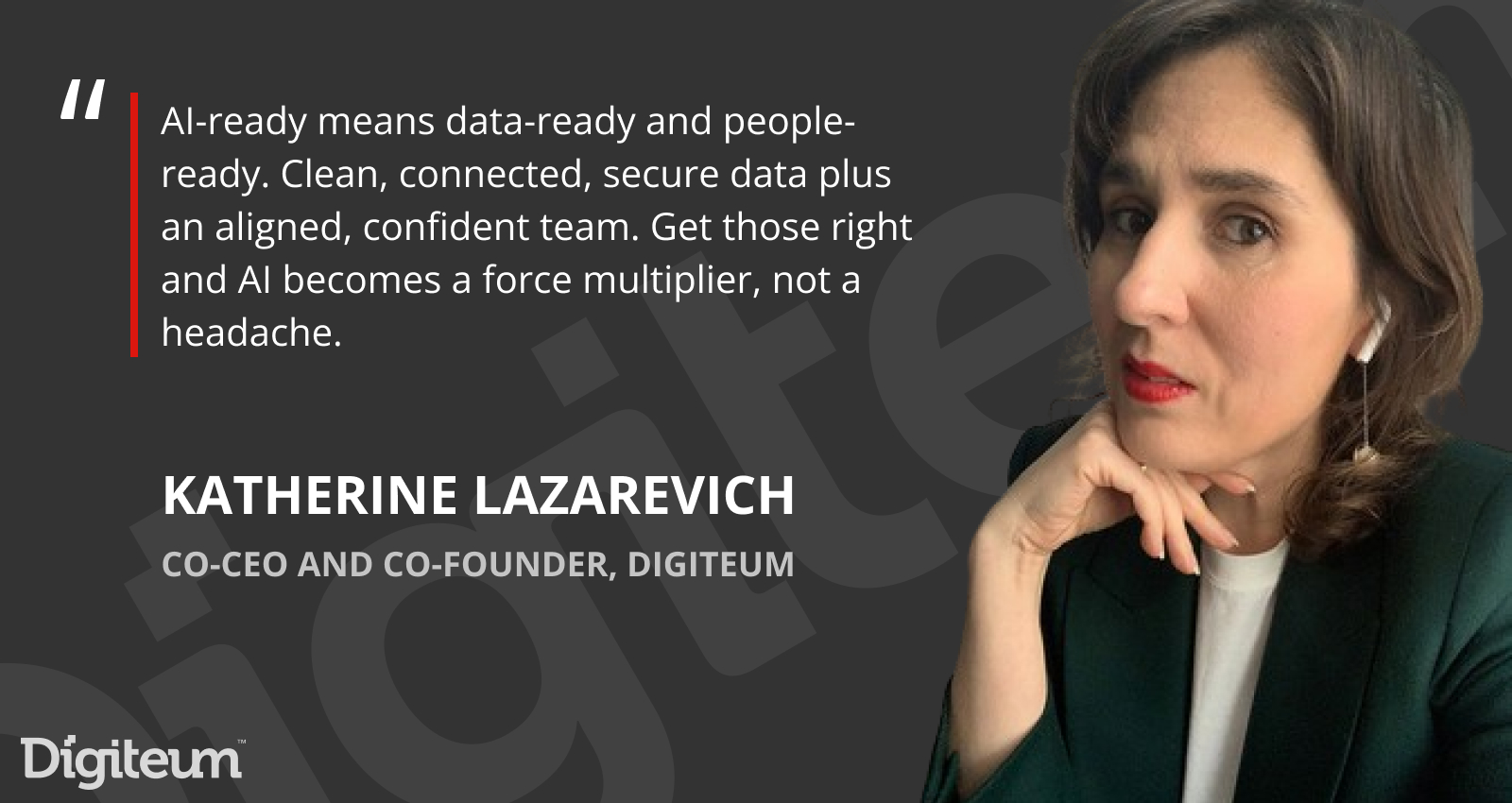
and Katherine Lazarevich (Co-Founder & Co-CEO, Digiteum)
shared their experience and proof that AI is not just an IT initiative. It is a multidisciplinary effort that requires high-quality data, engaged clinicians, strong governance, and thoughtful change management. When these elements come together, AI becomes a true driver of safer, faster, and more effective care.
Across organizations, one theme stood out: meaningful AI adoption begins with understanding the workflow. Healthcare institutions often face fragmented systems for prescribing medication, ordering diagnostics, and reviewing results. When these steps aren’t connected, the risk of errors rises.
Some healthcare providers are now redesigning these processes end-to-end and using AI to automate critical checks. This shift from manual, disconnected tasks to integrated digital pathways helps clinicians spend less time navigating systems and more time focusing on patients.
AI is also reshaping diagnostic pathways. In ophthalmology, models that analyse retinal images can detect early signs of conditions such as glaucoma long before symptoms appear. Early detection not only improves patient outcomes but also reduces unnecessary referrals and pressure on specialized departments.
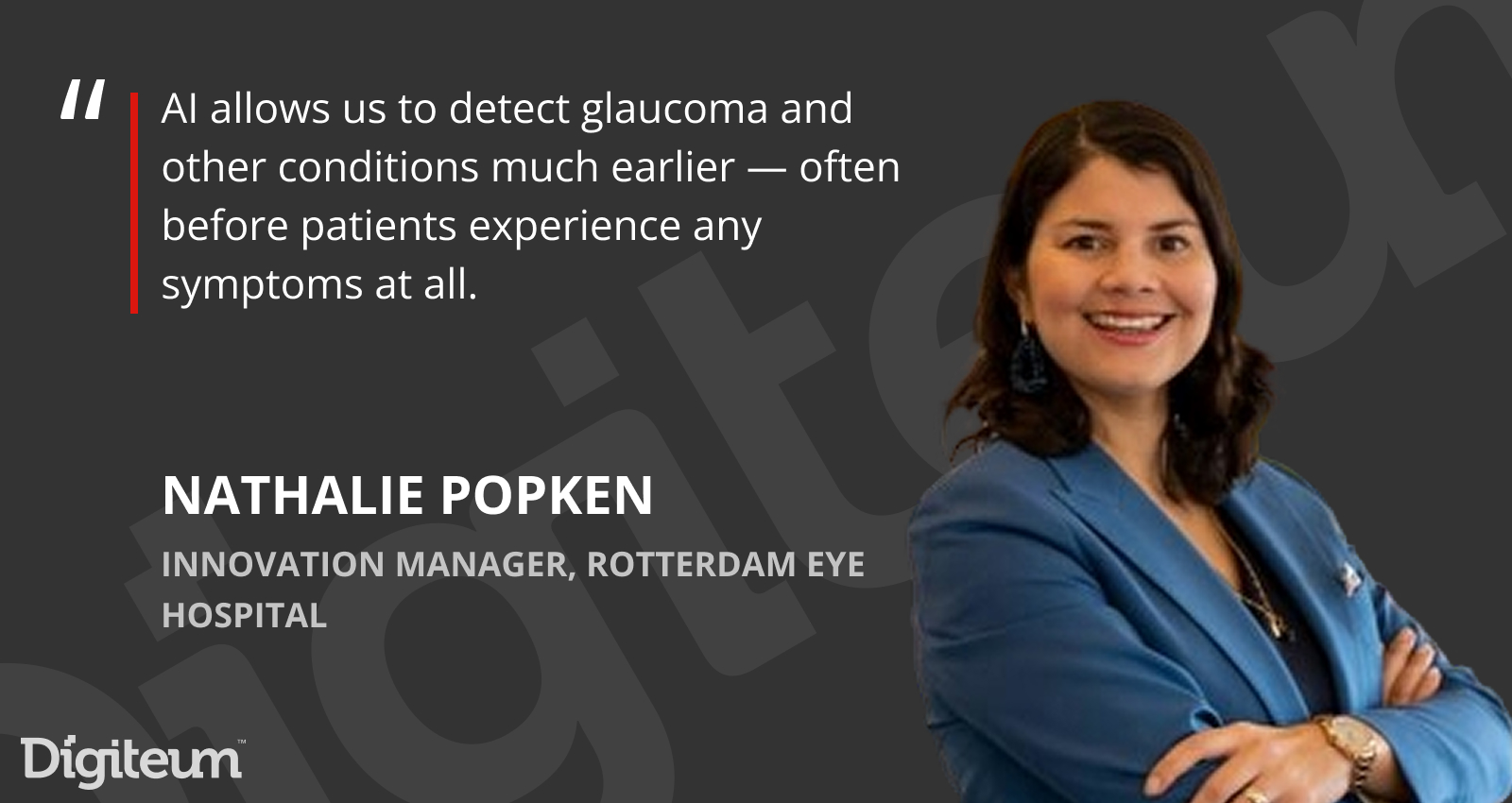
Projects like these highlight how AI can support preventive medicine by giving clinicians clearer, earlier insights supported by high-quality data.
Every expert emphasized that the success of AI in healthcare depends on reliable data. Many healthcare organizations still struggle with fragmented sources, inconsistent formats, and limited interoperability.
Organizations with modern cloud platforms, standardized architecture, and strong governance can scale AI far faster. These teams can move from individual pilots to broader automation, while ensuring compliance with GDPR, cybersecurity requirements, and medical safety standards.
Technology alone is not enough. Care delivery organizations must align clinicians, nurses, data teams, and IT around the same goals. Bottom-up engagement, shared ownership, and clear communication help ensure that AI tools support real problems rather than add new complexity.
Successful initiatives create multidisciplinary teams early and embed AI into clinical routines in ways that feel intuitive, not disruptive.
Katherine (Digiteum) offered pragmatic recommendations that apply to healthcare organizations of any size:
- Run a data‑readiness check – two‑week discovery to map gaps; it costs a fraction of a failed pilot.
- Pick one process with clear ROI (e.g., automating a single diagnostic report).
- Build a 10–12 week proof‑of‑concept with success metrics agreed up‑front.
- Involve end users early – nothing kills AI faster than poor adoption.
These steps allow healthcare organizations to build momentum, demonstrate value quickly, and prepare for larger-scale AI adoption.
Start with strong data fundamentals, pick one high-impact use case, and design security in from day one. When you do that, AI goes from buzzword to everyday advantage.
How we can help
At Digiteum we offer a short Data & AI Readiness Review, a quick assessment that maps your data landscape, identifies gaps, and gives you a clear, actionable roadmap. If you already know the problem you want to solve, we can jump straight into a 10-to-12-week proof of concept to show real results fast.
Book your consultationAI is becoming part of everyday clinical operations: from medication safety to diagnostics and administrative automation. By investing in strong data foundations, engaging the right teams, and choosing use cases with measurable outcomes, healthcare organizations can move from experimentation to impact.
Our talk show highlighted a clear message:
“AI is not an add-on to healthcare: it is now part of the core process of delivering safe and efficient care.”
You can watch the complete discussion, including practical examples and audience insights, in the full recording below: